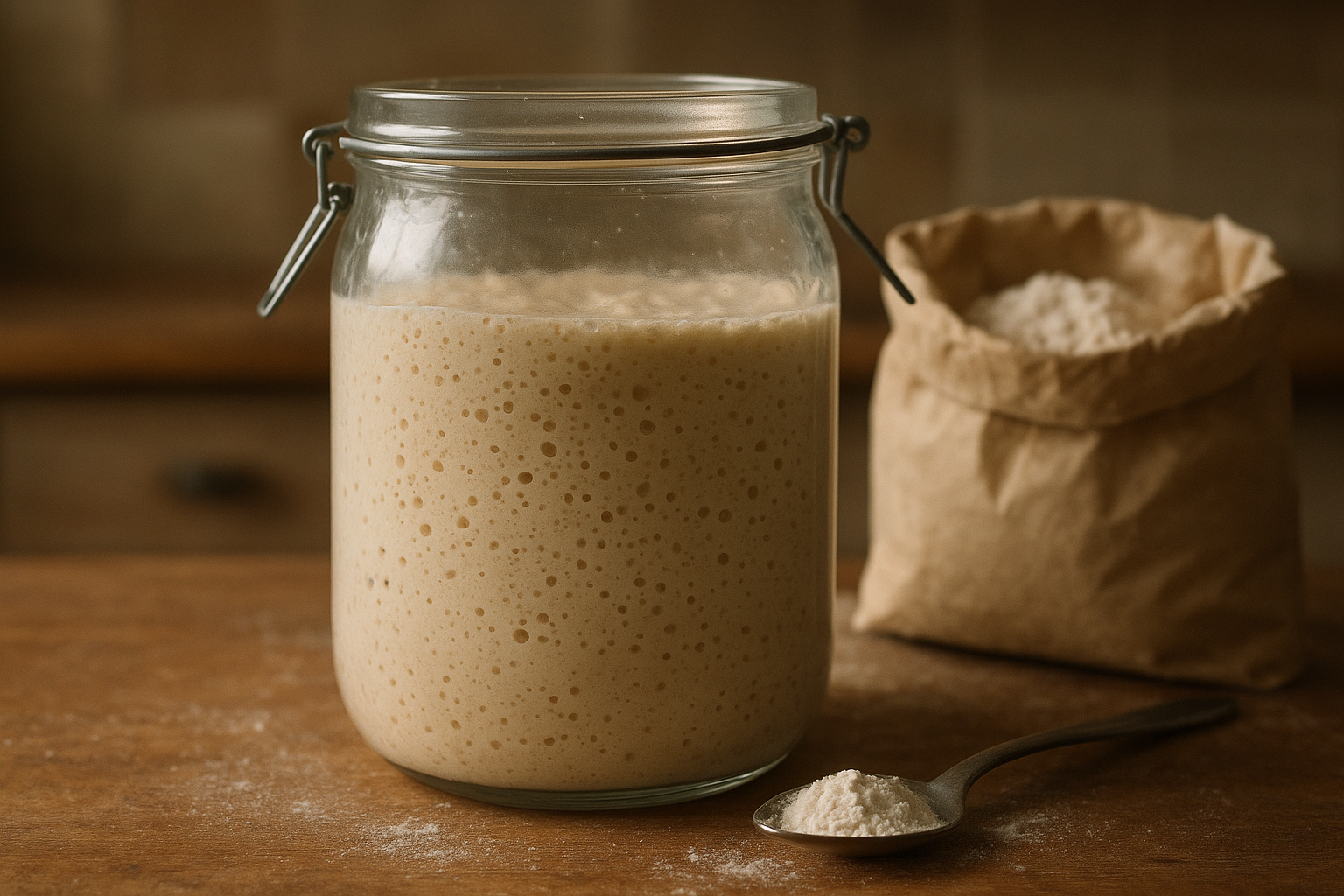

Week one expectations
Day one feels simple. Flour and water in a jar. But what follows can look confusing. Big bubbles one day, almost nothing the next. Sharp smells, then sweeter aromas. This is normal biological succession, not failure.
The goal of week one is not a perfect starter. The goal is consistency. Feed on schedule, keep the jar clean, and observe patterns instead of reacting to every fluctuation.
If you stay steady, the starter stabilizes. Not in a dramatic moment, but in a clear pattern you can trust.
If this step feels unpredictable, you are not doing anything wrong. It simply has more moving parts than it appears at first glance. Think of it as an interview with your dough: you ask questions through touch, tension, and timing, and the dough answers through resistance, elasticity, and gas retention.
Use a short control loop to keep decisions clean: observe, adjust one variable, and wait one interval before adjusting again. For most kitchens, that interval is 20 to 30 minutes. Rapid stacked changes make troubleshooting harder because you will not know which adjustment actually helped.
A reliable pattern many home bakers use is to treat the first attempt as a calibration bake. They do not chase perfection. They focus on readable signals and clean notes. By the second or third bake, small improvements stack: cleaner shaping, better spring, and far less second-guessing.
Before moving forward, do a quick debrief: what cue looked strongest, what cue appeared late, and what you would change by plus or minus 15 minutes next time. These tiny post-step notes make future decisions faster and more accurate than relying on memory alone.
For Creating a Starter from Scratch, the week one expectations phase is where confidence is earned through repeatable decisions. Work with intentional pacing: observe, choose one adjustment, and give it time to show a result. If you keep clean notes on what changed and why, your next bake starts with evidence instead of guesswork, and that is usually the difference between random success and reliable outcomes.
Early activity
Fast bubbles in days two and three often come from bacteria racing ahead early. Useful sign, but not full maturity.
Do not assume it is bake-ready yet. Keep feeding and look for repeatable rise-and-fall cycles.
This is one of those moments where the dough gives honest feedback. If it tears, tightens, or loses shape too quickly, treat that as information and adjust gradually instead of pushing through.
A practical checkpoint is to take a quick photo and a short note at the start and end of this sub-step. Visual comparison over time will reveal progress that is hard to notice in the moment, especially when bake days are spread across weeks.
During early activity, focus on deliberate technique over speed. A controlled motion, a short pause, and a quick check of dough response will usually teach you more than pushing forward fast. Treat this as a skill rehearsal, and the payoff shows up later in cleaner structure, more predictable fermentation, and stronger final oven spring.
The quiet phase
Many starters appear to stall midweek. This is common. Continue feeding with clean ratios and stable timing.
The culture is reorganizing. Give it time.
A common real-world scenario is that this detail feels minor until it compounds with temperature and timing. Then it suddenly becomes the difference between a loaf that opens beautifully and one that feels flat. Paying attention here is not overthinking; it is leverage.
When you review your notes, look for repeatable patterns rather than isolated wins. If the same adjustment improves handling and final crumb twice in a row, lock it in as part of your baseline process.
During the quiet phase, focus on deliberate technique over speed. A controlled motion, a short pause, and a quick check of dough response will usually teach you more than pushing forward fast. Treat this as a skill rehearsal, and the payoff shows up later in cleaner structure, more predictable fermentation, and stronger final oven spring.
From active to reliable
A starter becomes useful when it behaves predictably, not just energetically once. You want repeatable doubling windows, balanced aroma, and strong lift over multiple days.
When you reach that stage, baking becomes easier because timing decisions are grounded in real signals instead of guesswork.
Most bakers remember one frustrating loaf that looked promising until the final step collapsed. In nearly every case, the turning point happened here. Slow down, watch texture and movement, and avoid heroic last-minute fixes. This stage rewards consistency more than creativity, and that is excellent news because consistency is trainable.
Practical routine: set a 30-minute interval timer, then capture three notes at each checkpoint. Record room temperature, dough temperature, and one texture cue such as smoothness, stickiness, or bounce. This takes less than a minute and turns guesswork into a timeline you can compare across bakes.
When this stage clicks, the rest of the bake day feels lighter. You are no longer reacting to surprises; you are guiding outcomes. That shift from reactive to intentional baking is where confidence is built, and it shows up in the crumb as much as in your workflow.
Finish with a one-line decision log that includes why you moved on when you did. On your next bake, compare that decision to the final loaf quality. Over a few bakes, this creates a practical feedback loop you can trust.
For Creating a Starter from Scratch, the from active to reliable phase is where confidence is earned through repeatable decisions. Work with intentional pacing: observe, choose one adjustment, and give it time to show a result. If you keep clean notes on what changed and why, your next bake starts with evidence instead of guesswork, and that is usually the difference between random success and reliable outcomes.
Maturity checks
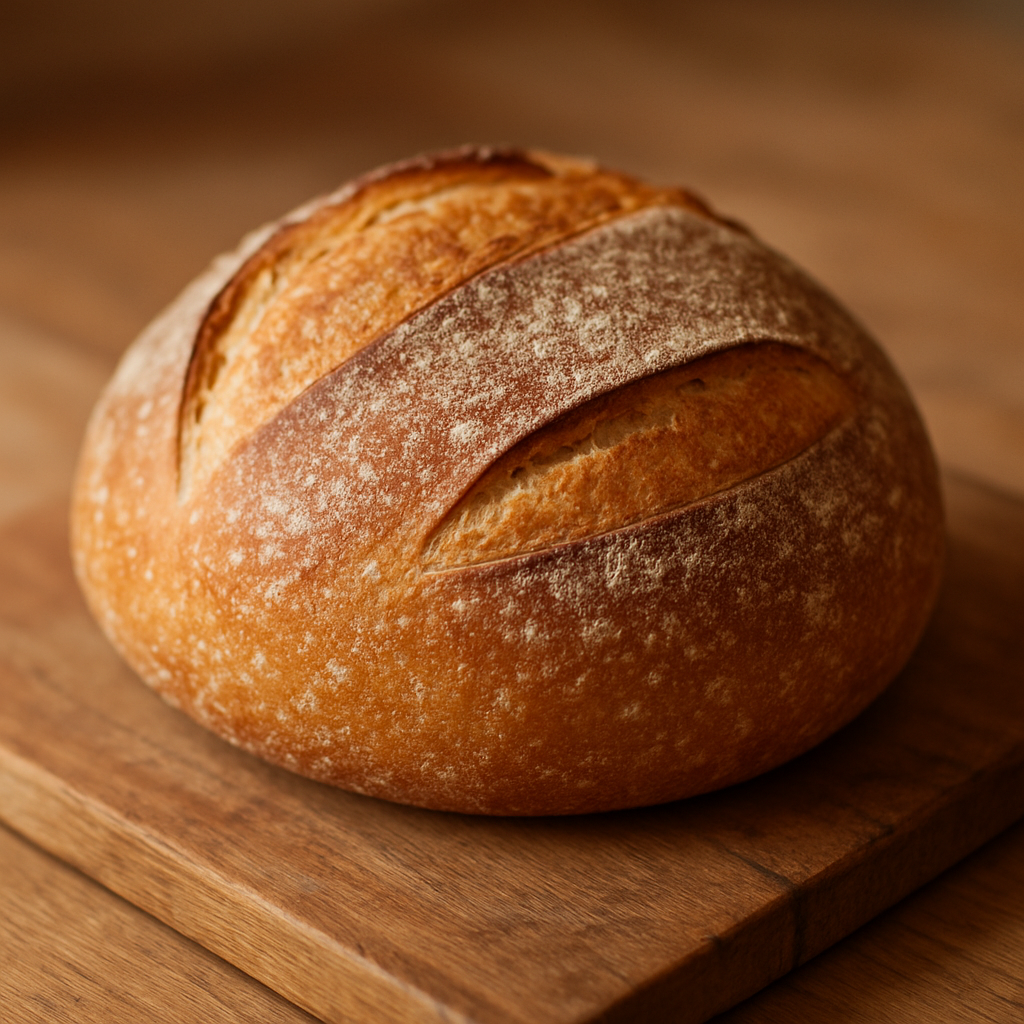
Check rise speed after feeding, bubble structure, and aroma. Aim for consistency across several feed cycles.
If growth is weak, increase warmth slightly and reduce feeding dilution for a few cycles.
In practice, this sub-step is where many bakers either gain control or lose momentum. It helps to slow your hands down and read the dough deliberately. Clean, repeatable motions beat force every time.
Concrete adjustment plan: keep one variable fixed for two consecutive bakes, then tune only one setting at a time. Useful candidates are hydration by 1 to 2 percent, rest windows by 10 to 15 minutes, or proof temperature by 1 to 2 degrees. Small moves are easier to evaluate accurately.
During maturity checks, focus on deliberate technique over speed. A controlled motion, a short pause, and a quick check of dough response will usually teach you more than pushing forward fast. Treat this as a skill rehearsal, and the payoff shows up later in cleaner structure, more predictable fermentation, and stronger final oven spring.
Maintenance rhythm
Room temp daily feeds work for frequent bakers. Fridge storage with weekly feeds works for slower cadence.
Choose the rhythm you can actually sustain.
In practice, this sub-step is where many bakers either gain control or lose momentum. It helps to slow your hands down and read the dough deliberately. Clean, repeatable motions beat force every time.
Concrete adjustment plan: keep one variable fixed for two consecutive bakes, then tune only one setting at a time. Useful candidates are hydration by 1 to 2 percent, rest windows by 10 to 15 minutes, or proof temperature by 1 to 2 degrees. Small moves are easier to evaluate accurately.
During maintenance rhythm, focus on deliberate technique over speed. A controlled motion, a short pause, and a quick check of dough response will usually teach you more than pushing forward fast. Treat this as a skill rehearsal, and the payoff shows up later in cleaner structure, more predictable fermentation, and stronger final oven spring.
Join hundreds of other bakers now
Keep your starter, recipes, and bake journal in one place.
Download Kneadly